
What Happens If Schools Suddenly Keep Kids Overnight
A school keeping kids late or overnight is not automatically catastrophe. It is a systems problem: safety, accountability, communication, transportation, medication, food, sleep, and parent decision pressure.
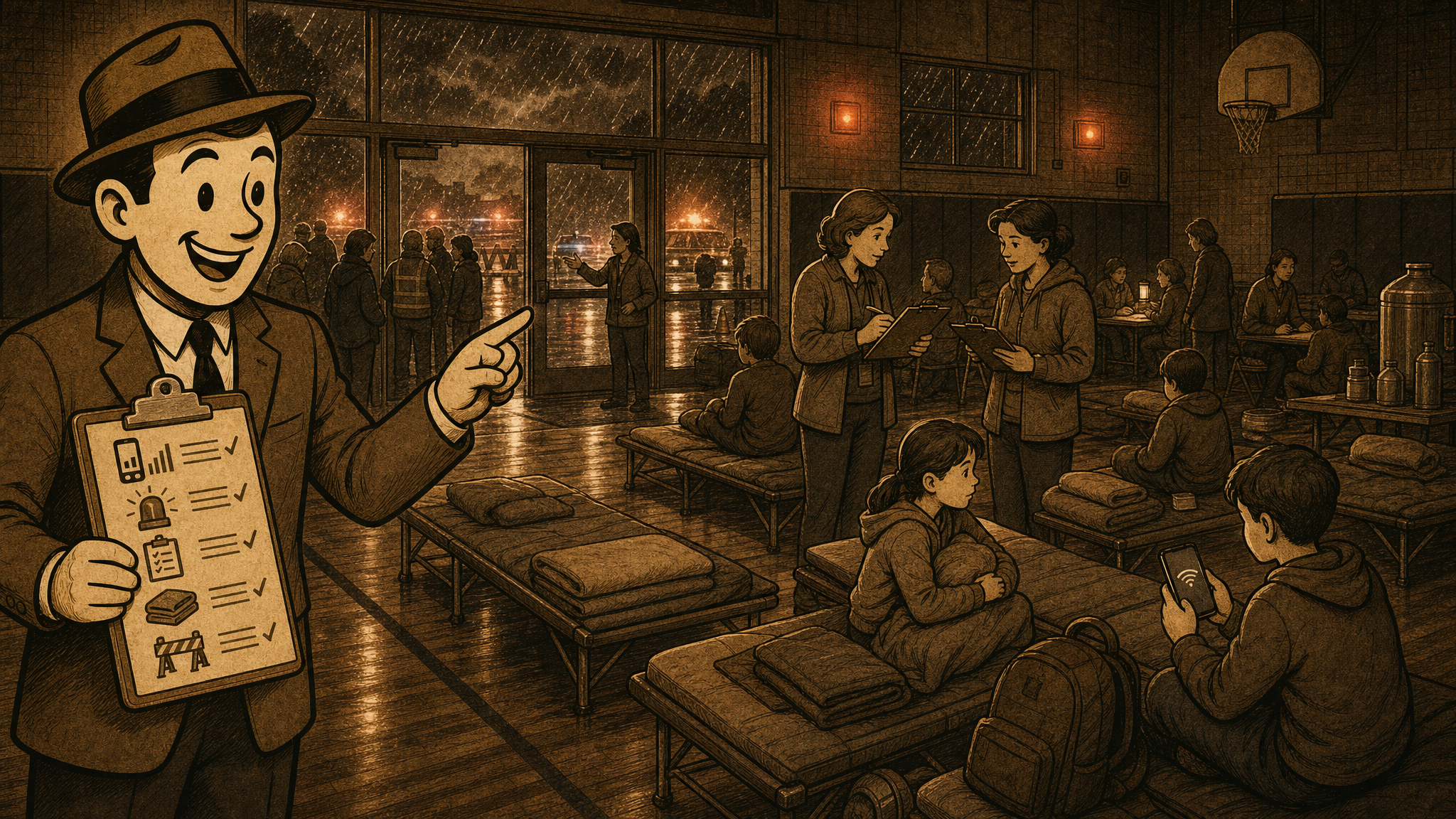
The realistic version
A school keeping students after hours sounds dramatic because parents imagine the worst version first. But the more common pattern is simpler: something outside the normal school day makes ordinary dismissal unsafe or impossible.
Severe weather. Flooded roads. Wildfire smoke. A nearby police perimeter. A utility failure. A transportation breakdown. A chemical incident. A regional emergency that jams roads and phones. In those situations, the safest immediate move may be to keep children accounted for inside a supervised location until the next step is clear.
This is not a prediction. It is a recognition exercise. Families do better when they understand the chain before the chain is happening.
What systems start carrying the load
FEMA’s school emergency operations planning guidance emphasizes planning with community partners, clear terminology, exercises, communication, and after-action improvement. That matters because schools are not isolated islands during a real emergency. They depend on roads, utilities, emergency services, district communication, family records, and staff capacity.
| System | What parents may see | Why it matters |
|---|---|---|
| Communication | Texts, alerts, automated calls, app messages, rumor screenshots, and changing pickup instructions. | Families must separate official updates from panic chatter. |
| Transportation | Buses delayed, roads closed, pickup locations moved, or parents told not to come yet. | The closest parent may not be the best pickup adult. |
| Student accountability | Schools may slow release to verify identity and authorized pickup. | That feels frustrating, but it protects children from chaotic handoffs. |
| Student needs | Medication, food, sensory needs, anxiety, glasses, chargers, custody notes, or special instructions become important. | Small records prepared ahead of time reduce pressure on staff and parents. |
The parent decision pressure
Imagine this: the school sends a message that dismissal is delayed. Another parent posts that police cars are nearby. Your child’s phone is dead. Your spouse says to go now. The district says wait for instructions. Traffic is already building.
This is the moment normalcy bias and protective instinct fight each other. One voice says, “It is probably fine.” Another says, “Go get my kid now.” The safest answer is usually not improvising in the parking lot. It is following verified instructions while your family activates the pickup chain you already chose.
What not to do
- Do not rely on one phone. Ready.gov tells families to know how they will contact and reconnect if separated, and to pick an out-of-town contact because that person may be easier to reach.
- Do not make the school guess who is allowed to pick up your child. Keep authorized adults current before the emergency.
- Do not turn rumors into movement. Screenshots are not instructions. Use official school/district/emergency channels.
- Do not teach kids a complicated crisis script. Teach simple calm rules: stay with the class/adult, keep the contact card, wait for verified pickup.
Connect the pattern
This is the same family pattern seen in outages, floods, water advisories, and road failures: the official picture may lag behind the household decision. Prepared families are not less emotional. They just have fewer decisions left to invent under pressure.
Sources used for this field guide
- Imperial War Museums: The Evacuated Children Of The Second World War, source.
- UK Government History Blog: Child Evacuees in the Second World War: Operation Pied Piper at 80, source.
- The National Archives: Government evacuation scheme, source.
- The National Archives: Evacuees research guide, source.
- FEMA: Guide for Developing High-Quality School Emergency Operations Plans, source.
- DOJ COPS Office: Student-Parent Reunification after a School Crisis, source.
- Ready.gov Kids: Make a Plan, source.
- Ready.gov: Make A Plan, source.
Defeat the pattern before it reaches your house
History does not hand families certainty. It hands them patterns. Choose one contact, one backup adult, and one calm sentence your child can remember before the weird day arrives.
Browse the Field Library or see Defeat History tools and guides.
