
A Family Reunification Plan Parents Actually Need
A calm parent-side reunification plan for school emergencies: contacts, pickup authority, meeting places, child cards, custody details, and the conversation your family should have before the weird day arrives.
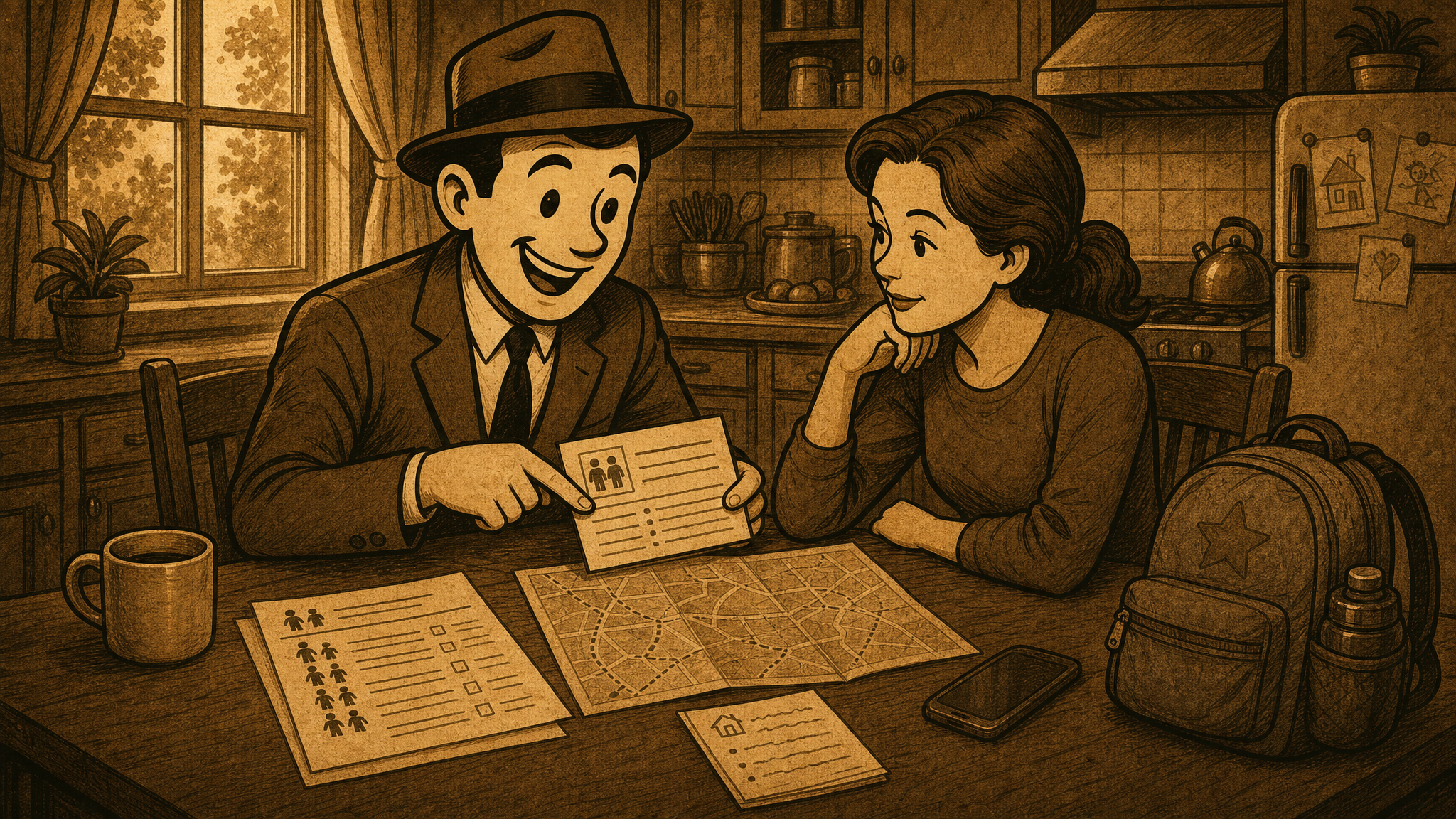
The plan is not the panic
A family reunification plan is not an admission that something terrible is likely. It is the child-safety version of having a spare key, a smoke alarm, and a backup ride.
Ready.gov says families may not be together when a disaster strikes and should know how they will contact one another and reconnect if separated. It also recommends familiar meeting places, an out-of-town contact, written copies of plans, and regular practice.
The six pieces parents actually need
| Piece | What to write down | Why it matters |
|---|---|---|
| Authorized pickup adults | Primary, backup, and last-resort adults already accepted by the school. | A trusted grandparent is not useful if the school cannot release your child to them. |
| Out-of-town contact | One person every family member can message. | Ready.gov notes out-of-town contacts may be easier to reach during a disaster. |
| Meeting places | One near home, one outside the neighborhood, and one school-specific reunification expectation. | Meeting places reduce improvisation if normal routes fail. |
| Child contact card | Names, phone numbers, allergies/medical note if appropriate, backup adult, and family password/phrase if your household uses one. | Backpacks, notebooks, and wallets work when phone batteries do not. |
| Needs list | Medication, glasses, sensory needs, custody paperwork, language needs, charger, comfort item for younger kids. | Small details become big when the day runs long. |
| Verification rule | Which official school/district channels count, and what rumor sources do not. | Panic spreads faster than policy. Decide ahead of time what you trust. |
What to do this week
- Update the school record. Confirm phone numbers, emails, emergency contacts, pickup authorization, medical notes, and custody restrictions if they apply.
- Choose the backup adult on purpose. Pick someone who can actually reach the school area, stay calm, bring ID, and follow instructions.
- Make the child card. Put one simple card in the backpack and one in a parent wallet. Keep it boring and practical.
- Teach the child’s part. “Stay with your class/adult. Keep your card. If phones are weird, Mom/Dad/approved adult will follow the school pickup plan.”
- Practice the message chain. Parent A contacts school source. Parent B contacts backup adult. Out-of-town contact receives the status update.
Adapt it for real family life
If the household friction is not the checklist but getting everyone to take it seriously, Bug In Without Freaking Out Your Spouse is built for that exact problem: turning “what if” into normal home routines without making preparedness weird.
The one-page version
You do not need a dramatic plan. You need a short one that works when phones are messy, roads are slow, and everyone wants their kid home five minutes ago.
Sources used for this field guide
- Imperial War Museums: The Evacuated Children Of The Second World War, source.
- UK Government History Blog: Child Evacuees in the Second World War: Operation Pied Piper at 80, source.
- The National Archives: Government evacuation scheme, source.
- The National Archives: Evacuees research guide, source.
- FEMA: Guide for Developing High-Quality School Emergency Operations Plans, source.
- DOJ COPS Office: Student-Parent Reunification after a School Crisis, source.
- Ready.gov Kids: Make a Plan, source.
- Ready.gov: Make A Plan, source.
Defeat the pattern before it reaches your house
History does not hand families certainty. It hands them patterns. Choose one contact, one backup adult, and one calm sentence your child can remember before the weird day arrives.
Browse the Field Library or see Defeat History tools and guides.
