
Succession Planting for Beginners: Keep the Garden Producing Longer
Planting once can create one short harvest. Succession planting uses crop waves, open-space replanting, and local timing so a family garden keeps producing longer.
The First Harvest Can Fool a Family
The first garden harvest can make a small backyard project feel finished. Lettuce looks good, radishes come in fast, beans finally start climbing, and for a week or two the garden feels like it has solved something.
Then the bed empties out. The weather changes. The family schedule gets crowded. The garden is not dead, but it has gone quiet. That is where a lot of beginner gardens reveal the real weakness: the family planted a garden like a picture, not like a food system.
The Old Lesson Behind Crop Waves
Household gardens used to carry more practical weight than a weekend project. They were food, barter, nutrition, morale, and a way to stretch thin months. Families did not need every bed to look perfect. They needed useful food to keep arriving.
Planting everything at once gave a household one wave of labor, one wave of harvest, and one wave of trouble if heat, insects, weather, or family life hit at the wrong time. A garden that feeds a household has chapters.
What Succession Planting Means
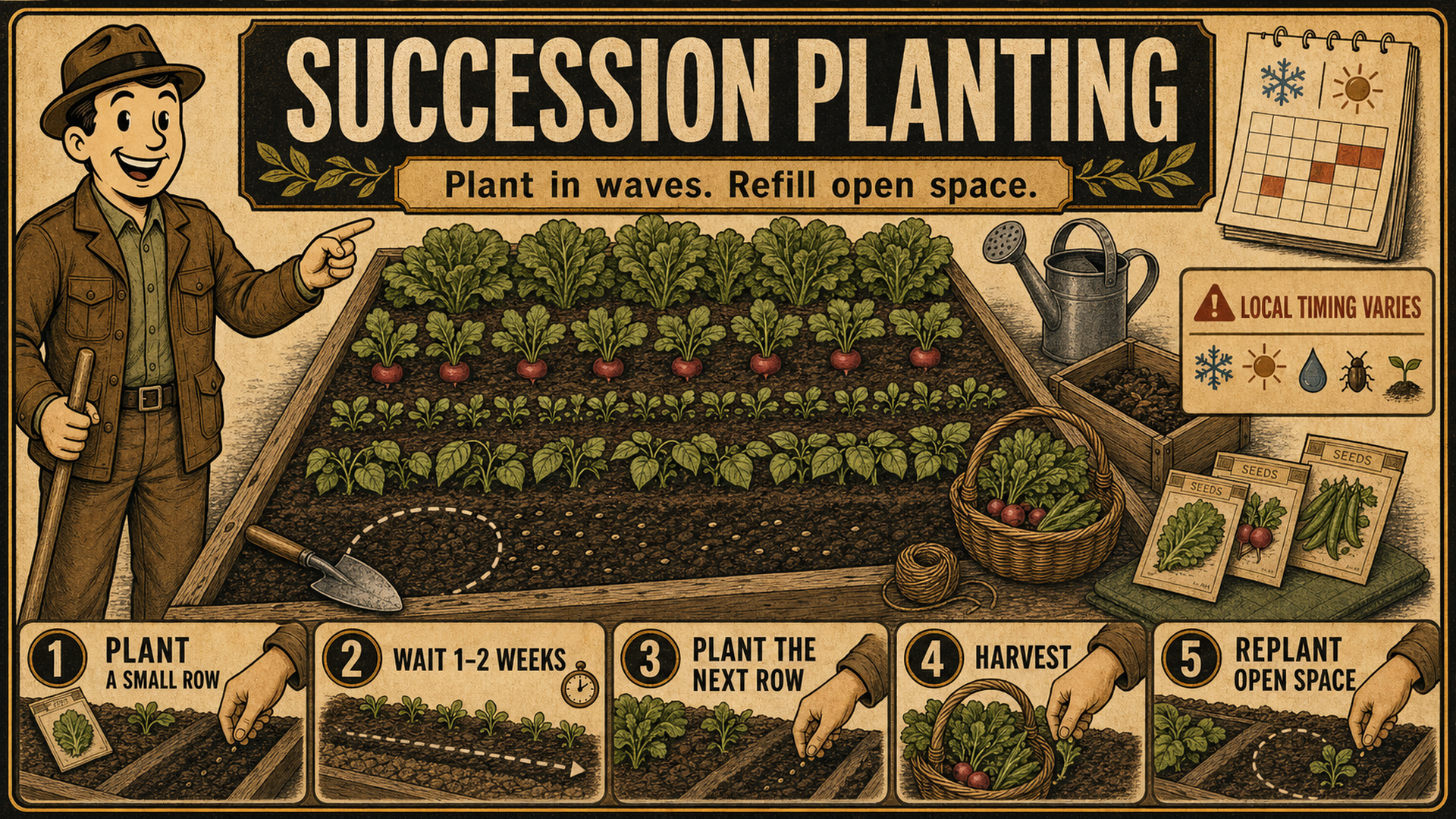
Succession planting means using timed crop waves and replacement planting so the garden produces over a longer window. Instead of sowing all the lettuce, radishes, beans, herbs, or carrots in one big Saturday burst, you plant smaller amounts in intervals. When a crop finishes and leaves space, you replant that space with something that fits the remaining season.
Kentucky Extension lists sample intervals such as leaf or baby lettuce, radish, spinach, and cilantro every 7 days; sweet corn, bush beans, and head lettuce every 10 days; beets, turnips, and herbs every 14 days; cucumbers, melons, and carrots every 21 days; and summer squash every 30 days. Treat those as examples, not a national calendar. Frost dates, heat, rainfall, pests, soil, seed variety, and family capacity still matter.
WVU Extension gives the beginner version cleanly: make several smaller plantings at timed intervals rather than planting everything at once.
How This Breaks in a Normal Home
A family starts a small food garden because groceries feel expensive, supply feels less trustworthy, or they want the kids to see food come from somewhere besides a barcode. They plant too much at once because seed packets are cheap and spring enthusiasm is loud.
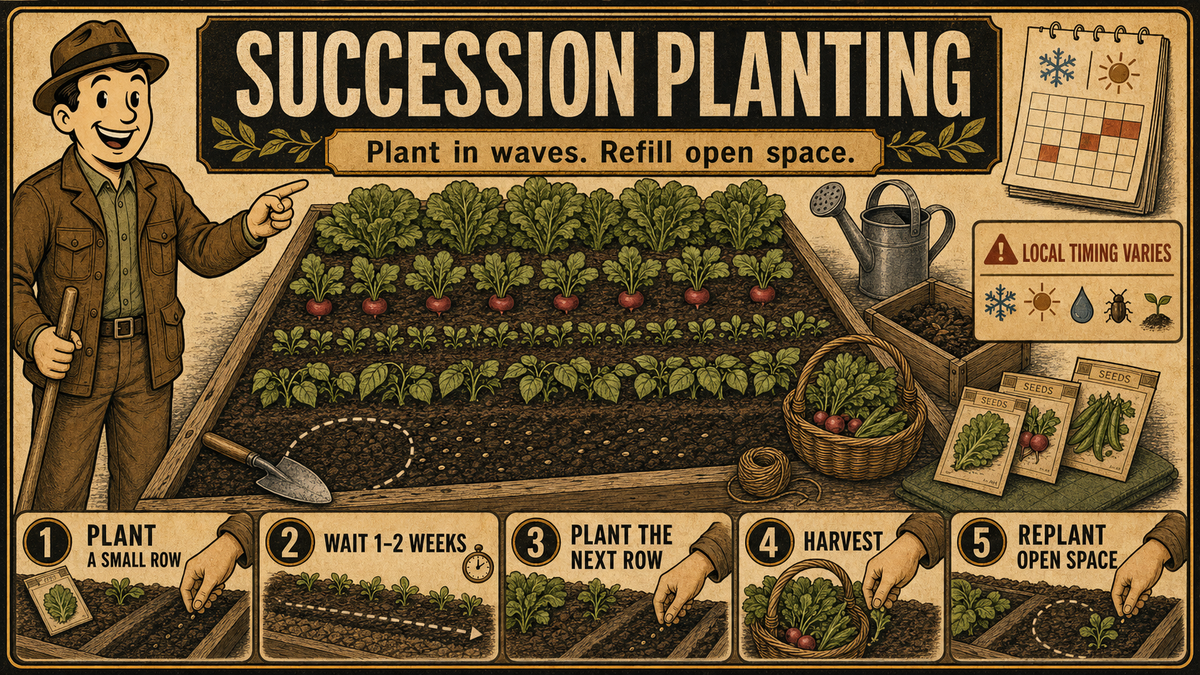
Then everything ripens together. Lettuce bolts. Radishes get woody. Beans hit during a travel week. The empty bed stays empty because nobody put the next planting date on the calendar.
That is not laziness. It is a system failure wearing gardening gloves.
The First 72 Hours Still Come First
Keep this straight: a garden is future food. It is not what feeds the kids during the first three days after a storm, outage, boil-water notice, local disruption, or payment problem at the store. The first window still belongs to stored water, shelf-stable meals, basic sanitation, a way to cook, light, and a household plan people can follow.
Use the First 72 Hours field guide first. Then build the garden calendar as the next layer.
The Clean Family Plan
- Start with one crop wave. Pick a crop your family eats, check local Extension guidance, read seed packet days-to-maturity, and calendar the next small planting.
- Mark empty-space triggers. When lettuce, radishes, beans, or herbs come out, already know whether to replant, switch crops, feed the soil, or rest the bed.
- Feed the soil between waves. Repeated harvests ask more from a bed. Add compost or fertility based on local guidance and what you are growing.
- Make the calendar visible. Put it on the fridge, in the family calendar, or in the garden notebook where tired people can still follow it.
- Keep the promise modest. One crop wave is a win. Two is better. A whole-season plan can come later.
How This Connects to the Garden Chain
No-Dig helps build soil without tearing up the yard. Hugelkultur deals with water judgment. No-Dig garden beds make the first bed less intimidating. Succession planting turns that bed work into rhythm.
Do not buy a bigger plan because fear is loud. Use the organized shortcut only if it saves confusion, time, and wasted seed.
The Old Lesson
A garden that arrives all at once can disappear all at once. Plant in waves, replant what opens, respect your local season, and keep the family fed by rhythm instead of luck.
Sources
Build the first useful garden layer
Start with the first three days, then add a crop-wave calendar your household can actually maintain.
Print the First 72 Hours guide or use the Emergency Food Garden Starter Kit.
