
Start one backup food bed without tearing up the whole yard.
No-Dig is a lower-barrier first garden bed after the Milpa lesson: build soil on top, choose clean inputs, check light and water, and respect the First 72 Hours boundary.
The short version
The fastest way to make a family suspicious of your garden plan is to start by tearing up the yard.
One Saturday, one rented machine, one pile of supplies nobody agreed to buy, and suddenly the "small food-buffer project" looks like a lifestyle conversion with dirt on its boots. That is where a lot of normal households quit before the first seed ever gets honest sunlight. Not because they hate the idea of growing food, but because the first move looks too big, too messy, too expensive, and too strange for the life they are already carrying.
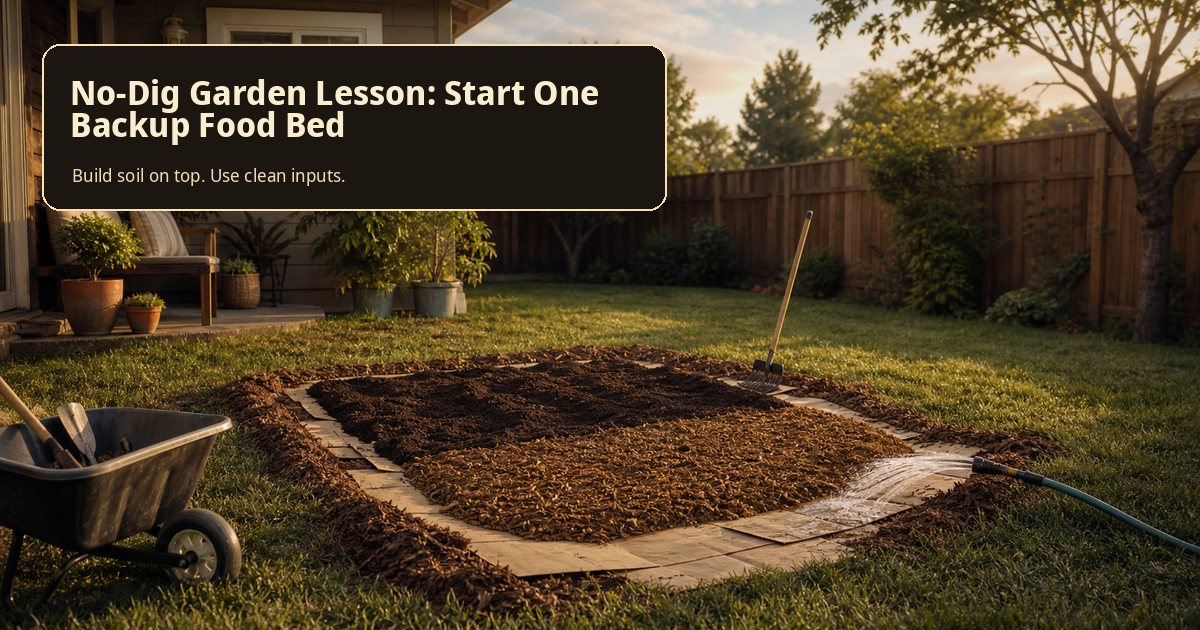
No-dig, sheet mulch, or lasagna-style gardening offers a better first hinge. You build soil on top instead of ripping the ground open. You choose one bed footprint, layer clean materials, add finished compost or topsoil where planting will happen, and let time do part of the work. That makes it one of the lower-barrier entries after the Milpa lesson. Milpa is a complex food system: diversity, local fit, timing, management, and cultural context all matter. No-Dig is simpler. It does not ask a beginner to understand an entire food system on day one. It asks for one sane bed, clean inputs, water access, and patience.
That matters now because a backup garden does not need to start as a public statement. It needs to start as household margin. Food costs move. Weather moves. Work schedules move. Motivation definitely moves. A normal family needs a first build that does not wreck the yard, raid the bank account, or make a spouse wonder when the bunker brochure arrives. No-Dig can help with that, if you keep the claims clean and do not turn cardboard into a miracle.
The older pattern behind this is plain enough: households that kept food systems alive usually respected soil. They composted, mulched, layered organic matter, worked with what they had, and understood that growing food was not just seeds meeting dirt. It was soil meeting time. Public memory likes the dramatic tool, the big field, the heroic harvest. Household memory is smaller and more useful. It remembers the pile of leaves saved instead of bagged, the kitchen scraps turned into fertility, the bed built a little higher each season, and the ugly fact that poor soil makes every other garden promise work too hard.
What no-dig can and cannot promise
No-Dig is not ancient magic. It is a modern name for a very practical instinct: stop treating soil like a disposable surface. Cover it. Feed it. Protect its structure where the site allows. Use organic layers to suppress some weeds, conserve moisture, and build better planting conditions over time. Oregon State Extension describes sheet mulching and lasagna composting as no-till or no-dig methods that can suppress weeds, conserve water, and build soil, while also making clear that decomposition takes time. Lasagna composting uses alternating nitrogen-rich greens and carbon-rich browns, and it can take six months or longer to be fully ready.
That last part matters. Six months or longer is not "plant Saturday, harvest the family bailout by Tuesday." Anybody selling that should be watched the way you watch a man with three watches and no appointment.
The beginner mistake is thinking No-Dig means no judgment. It does not. The bed still needs light. It still needs water. It still needs safe materials. It still needs enough finished compost or topsoil on top if you intend to plant soon. Cardboard can help smother many weeds and hold the layers together, but it is not always harmless and it does not defeat every perennial troublemaker. Bindweed, blackberry, quackgrass, and other persistent weeds can push the argument longer than a beginner expects. Thick cardboard layers can also slow water and air movement in some sites, especially if the bed is poorly matched to the soil, rainfall, or existing roots.
Material safety is the gate
Use plain, clean cardboard or newspaper. Remove tape, labels, staples, glossy surfaces, and heavily colored printing. Avoid mystery boxes that carried chemicals, oils, cleaners, or unknown mess. If the cardboard smells wrong, looks wrong, or makes you start negotiating with yourself, do not put it under food. That is not paranoia. That is not eating from the questionable pile.
Compost needs the same hard look. Plant-based or commercially processed compost is the cleaner beginner lane when you can get it. If animal-based compost or manure is used, handle it with food-safety discipline: apply it well before harvest, keep it stored away and covered, use gloves, wash hands and produce, and follow local Extension guidance. Ohio State Extension warns that composted or aged manure and animal-based soil amendments can carry foodborne pathogens if not thoroughly processed, and the cleared claim boundary says not to pretend aged manure is automatically safe.
There is one more safety layer people like to skip because it ruins the clean little weekend fantasy: soil contamination. If lead risk or industrial contamination is plausible, especially in older urban lots, near old painted structures, busy roads, former industrial sites, or unknown fill, test the soil or use a clean raised/container setup with clean soil and sensible barriers. Do not grow food in questionable ground just because a video said cardboard fixes everything. Cardboard is a layer. It is not a priest.
The household failure pattern
Here is the modern trigger path. A family gets worried about food prices or supply interruptions. They remember the Milpa lesson about diversity and food systems, but that still feels too complex for the first move. So they decide to "just start a garden." They buy too much, pick a bad spot, lay down whatever cardboard was in the garage, dump half-finished compost or manure close to harvest crops, plant too soon in thin material, and then wonder why the bed dries out, smells off, grows weak plants, or becomes a weed negotiation zone. The project becomes another household argument. The lesson gets lost under the mess.
No-Dig works best when the first move is colder and smaller. Pick one bed footprint. Not the whole yard. Not the whole side fence. One practical rectangle, strip, or corner the family can tolerate seeing every day. Check that it gets usable sun for the crops you actually want. Check that water can reach it without a heroic bucket march. Check whether the site has contamination concerns. Then choose clean inputs before money starts leaving the house: plain cardboard or newspaper, leaves, straw or other appropriate mulch, finished compost, topsoil if needed, and seeds or starts that match the season.
Build for the clock you actually have
If you want to plant soon, do not rely on an unfinished stack of layers as if it were mature soil. Add enough finished compost or topsoil where roots will live. If you are building for later, let the bed settle and decompose. The useful phrase is "start a bed without tearing up the yard, but plan for decomposition time and clean inputs." That is the public claim boundary. Keep it that plain and the bed has a fighting chance.
Now set the First 72 Hours boundary where it belongs. A garden is a later resilience layer. It is not your first emergency food plan. Stored water, stored meals, a way to cook, basic sanitation, medication awareness, and a household plan come first. If a storm cuts power tonight, a lasagna bed in the side yard is not dinner. The First 72 Hours guide is the front door because those first three days punish families that confuse future capacity with immediate supplies.
Once the pantry-and-water layer is handled, the Backyard Backup Food Plan is the right next route for this lesson. It helps a normal household choose one food-buffer path without panic buying, without copying a system that does not fit, and without turning the yard into a job nobody voted for. The Emergency Food Garden Starter Kit can be mentioned after that only as the deeper planning step: layouts, safety checks, system chooser, crop-wave planning, and first-season discipline. Do not sell either one as survival insurance. Sell the useful work because the useful work is enough.
Do not worry. There is a plan here. No guarantee, no magic bed, no promise that one rectangle replaces the grocery store. But it is better than standing there in spring with a cart full of random supplies and no threshold for what "ready" means.
Start with a seven-day No-Dig starter checklist:
- Choose one bed footprint the household can live with.
- Check sun, water access, drainage, and contamination risk.
- Gather only clean plain cardboard or newspaper, with tape, labels, glossy color, and mystery contamination removed.
- Choose safer compost inputs, preferably plant-based or commercially processed compost for beginner food beds.
- Decide whether this is a plant-soon bed with finished compost/topsoil on top or a build-now, plant-later bed that needs months to break down.
- Pick crops your family eats and your season can support.
- Write down what you used, when you built it, when you watered it, and what changed.
Why this first bed matters
That last line is not busywork. Records keep you from becoming the kind of gardener who repeats the same mistake with more confidence every year.
No-Dig is not the whole food-security answer. It is the lower-barrier first build after the bigger system lesson. Milpa teaches that food resilience needs diversity, local fit, and management. No-Dig teaches that the first physical bed can be modest, safe, and normal-looking. The next lesson, Hugelkultur, pushes soil-building toward water storage and drought resilience, with its own cautions. Do not skip ahead because the next idea sounds more impressive. Impressive is expensive when the foundation is bad.
One clean bed, built on purpose, tells you more than ten saved posts and a shed full of panic supplies. Build soil on top. Use clean inputs. Respect the clock. Keep stored food and water first. Then let the garden become what it should be: one more layer between your family and being easy to corner.
Sources used for this lesson
- Oregon State University Extension, sheet mulching and lasagna composting with cardboard: source.
- U.S. EPA, Growing Gardens in Urban Soils: source.
- University of Maryland Extension, Safety of Materials Used for Building Raised Beds: source.
- Ohio State University Extension, Food Safety in Gardens: source.
Start small enough to keep going
Use the Backyard Backup Food Plan if you need one realistic food-buffer path before buying supplies. Use the Emergency Food Garden Starter Kit when you are ready for deeper layouts, safety checks, crop-wave planning, and first-season discipline.
Next garden step
The next step in this garden chain is the Hugelkultur Garden Bed lesson, which moves from low-drama bed building into water-resilience and drainage judgment.
