
Milpa Was Bigger Than Three Sisters. That Is The Lesson.
Milpa is not a copy-paste garden recipe. The useful lesson for modern families is diversity, local fit, timing, and a food plan with more than one point of failure.
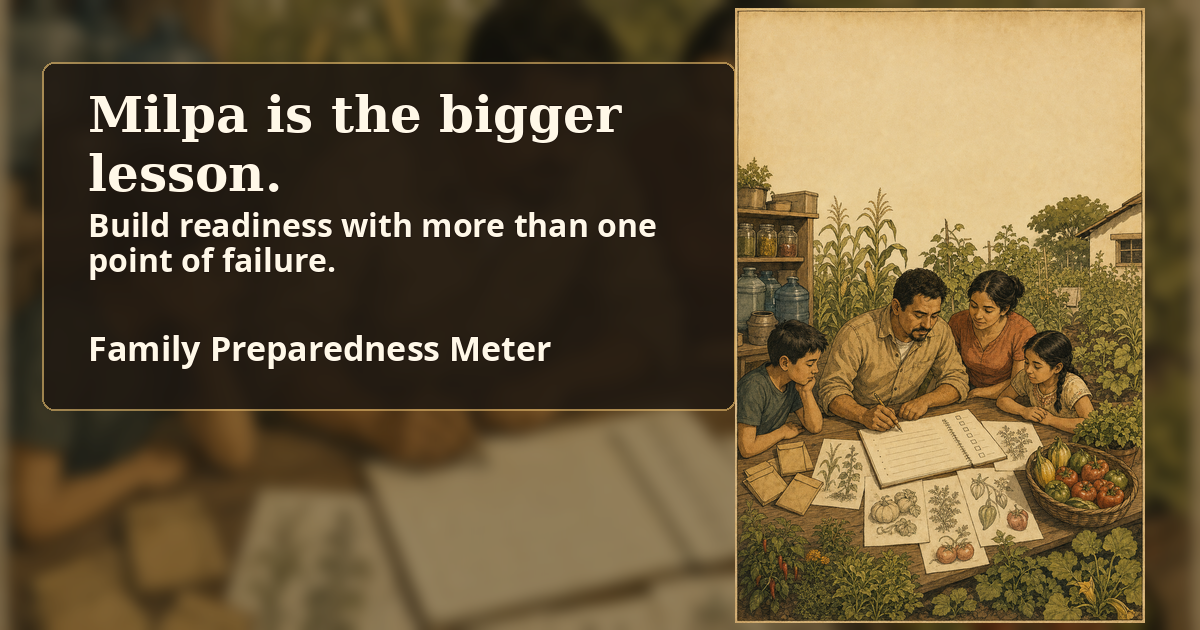
The easy mistake is to look at an old food system and turn it into a shopping list.
Corn. Beans. Squash. Add a few peppers. Maybe a tomato if the post needs color. Then somebody calls it Milpa, takes a clean picture, and walks away feeling historical. That is the kind of shortcut that looks useful right up until the garden starts asking questions the caption never answered: What grows in your season? What does your family eat? How much room do you have? What happens if pests find the one crop you were counting on? Who waters this thing when the first excitement burns off?
Milpa is a Mesoamerican multicropping agri-food system, not just a bigger Three Sisters garden. It often centers maize or corn, beans, and squash, but it can also include chiles, husk tomatoes or tomatillos, agaves, herbs, fruits, and other regionally adapted crops. The point is not to flatten a living cultural and agronomic system into “Mexican Three Sisters.” That would be lazy. Worse, it would teach the wrong lesson.
Three Sisters is the doorway. Milpa is the bigger room behind it.
Why That Matters To A Normal Family
Normal households are squeezed from more than one direction. Food prices, weather swings, seed choices, small yards, weak soil, pests, time, water, spouse tolerance, and beginner confidence all pile into the same hallway. A family does not need a fantasy homestead. It needs a food-buffer plan with more than one point of failure.
Milpa’s modern lesson is diversity, local fit, timing, and management. Take that lesson seriously and you get a better household plan. Steal the surface and you get costume gardening.
Historically, systems like Milpa did not come from people playing around with garden aesthetics. They came from food life: staple crops, secondary crops, local knowledge, household use, land rhythm, and repeated observation over time. A crop mix was not just decoration. It reflected what the place could grow, what the household or community could use, how plants interacted, and what the season allowed.
Do Not Ask, “How Do I Copy Milpa?”
Ask a better question: How do I build a small food system that fits my place?
For a modern family, that may mean one sunny bed that mixes a few compatible crops your family will actually cook. It may mean containers near water, because the hose reaches the patio and nobody has time to drag buckets through July. It may mean skipping corn this year because the yard is too small for good pollination and choosing a trellis, herbs, greens, compact squash, peppers, or tomatoes that match the site better.
It may mean using the Three Sisters as a teaching demonstration while the real food-buffer work happens in succession plantings, pantry planning, soil repair, and small crops that do not demand a perfect summer.
There is no shame in that. Shame belongs to the person who sells a one-size-fits-all miracle and calls it tradition.
The Failure Pattern
Here is the modern trigger path. A household gets worried about food costs or supply hiccups. It buys seeds too fast, picks crops from an internet list, skips the soil check, ignores local frost dates, plants everything at once, and assumes diversity means “more plants.”
Then the weak hinge breaks. The corn does not pollinate well in a tiny patch. The squash overruns the bed. The peppers need more heat. The soil is tired or unsafe. The water plan depends on motivation. The family does not eat half of what was planted. By August, the garden is not a food plan. It is a guilt patch.
Milpa teaches the opposite if you let it. It tells you that a food system is not just crop variety. It is crop variety matched to place, season, use, labor, soil, water, and timing. That is more demanding than a pretty diagram. It is also more useful.
Safety Comes Before The Garden Aesthetic
Before any product bridge or garden plan, get the safety layer right. If lead or industrial contamination is plausible, test soil or use clean raised/container setups. Avoid unknown treated wood, painted salvage, creosote railroad ties, and mystery materials around food beds. Use clean, plain cardboard only when sheet-mulching guidance fits the site, and remember that cardboard is not automatically harmless in every setup.
Compost and manure need food-safety sense; do not put raw or poorly handled manure near harvest and pretend old-timey equals safe. Local Extension guidance is not glamorous, which is usually a sign it is doing real work.
Pantry And Water Still Come First
A garden is not dinner tonight. If the power goes out, seedlings do not cook. If the water system gets questionable, tomatillos do not fill jugs. If roads close, a half-grown pepper plant is not a meal plan.
The first household food move is still stored water, stored meals, a way to cook, and a plan the family can follow without turning the kitchen into an argument. Start with the First 72 Hours, then use a practical food plan like The Calm Family Food Plan for a 2-Week Supply or the Family Food Gap Calculator to see where the real gaps are.
A Practical First Move
Once that is clear, the practical Milpa lesson becomes simple enough to start this week. Write down ten foods your household actually eats. Circle the ones that can reasonably grow in your climate, season, space, and time budget. Mark which crops are quick, which are warm-season, which need support, which need more space, and which would only make sense after you learn the site.
Then choose one small system: a mixed container group near water, a modest bed with complementary crops, or a demonstration patch that teaches support and timing without pretending to feed the house.
Helpful Tools, Not Magic Fixes
Disclosure: Some links in this section are Amazon affiliate links. If you buy through them, Defeat History may earn a small commission at no extra cost to you. The links point to product categories, not specific rankings or claims.
You do not need to buy anything to start. A pencil, a meal list, and a realistic water plan beat a pile of gear nobody maintains. Use tools only when they make the plan easier to keep.
- Garden planner notebooks can help you record what germinated, what failed, and what your family actually ate. A cheap spiral notebook or phone note works too.
- Container gardening supplies may help when space is limited or in-ground soil is questionable. Check drainage, weight, sun, and local guidance before buying.
- Seed-starting trays can be useful if your season and indoor space make starts practical. Skip them if you are not ready to water, light, and harden off plants consistently.
Where To Go Next
If you need to choose one realistic food-buffer path before buying seeds, soil, containers, or another garden idea that may not fit your life, start with the Backyard Backup Food Plan.
If you are ready for a deeper system chooser, safety checks, crop-wave planning, and a first-season route that does not pretend one old system works everywhere, use the Emergency Food Garden Starter Kit.
Three Sisters taught the doorway: plants can support each other, but timing matters. Milpa widens the lesson: food security is a managed system, not a single clever planting. The next step is lower-barrier for beginners, because not every family is ready for a complex polyculture. No-Dig and lasagna-style bed building come next because soil is where the plan either gets easier or turns into a job nobody voted for.
The Household Lesson
Choose crops the family will eat, not crops that make the garden look impressive to strangers. Build soil with clean materials. Learn pest pressure before buying every cure on the shelf. Keep water close. Keep records. Keep the system small enough that the family will maintain it after the first excitement fades.
That is how a household learns from an old system without pretending to own what it does not understand.
Claim note: This article treats Milpa as a living Mesoamerican multicropping agri-food system and focuses on modern household lessons. It does not claim one universal Milpa layout, a survival guarantee, or a grocery-replacement garden.
