
What Happened During Chicago’s Deadly Heatwave
Chicago’s 1995 heatwave shows why heat disasters are not just weather stories. They are household decision stories, building stories, and timing stories.
The short version
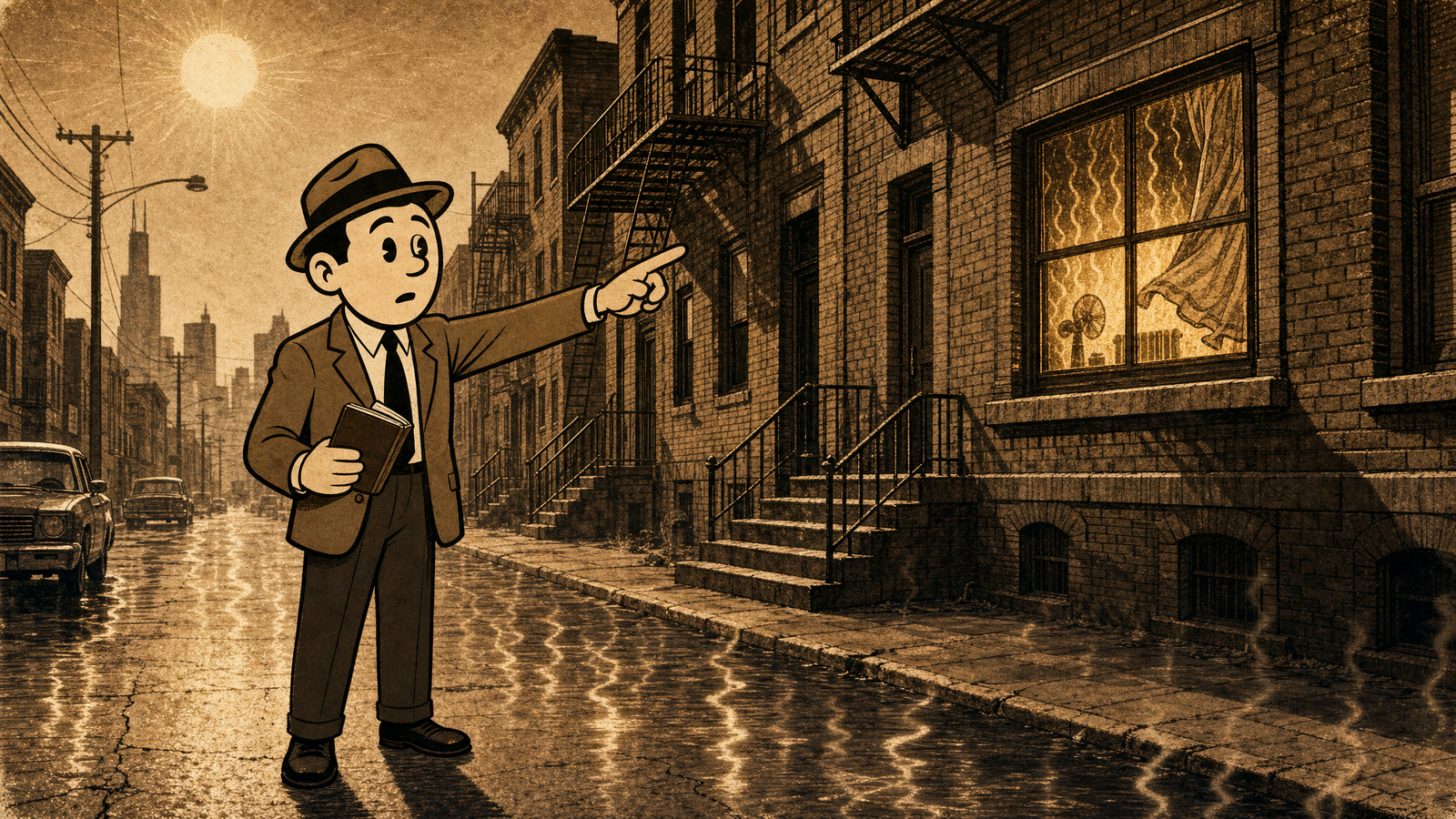
In July 1995, Chicago experienced a deadly heatwave that exposed a brutal truth: heat disasters often look ordinary until the danger is already inside the room.
CDC’s MMWR report on the event says maximum daily temperatures from July 12–16 ranged from 93°F to 104°F, and the heat index peaked at 119°F on July 13. During July 11–27, the Cook County Medical Examiner’s Office certified 465 deaths as heat-related.
That is why the Chicago heatwave matters for families now. The history is not just “it got hot.” The history is that reasonable people were trapped between habit, uncertainty, pride, fear, poor information, building conditions, health limits, and the pressure not to overreact.
Why reasonable people stayed in danger
From the outside, it is easy to ask why someone did not simply leave a hot apartment or find a cooler place. That question misses the human reality.
Many people were older, alone, medically vulnerable, disconnected from family, worried about crime, or used to enduring heat as a normal summer hardship. Some may not have had working air conditioning. Some may not have had safe transportation. Some may have kept windows closed for security. Others may not have recognized the danger until weakness, confusion, or exhaustion had already narrowed their choices.
The lived experience was not one clean headline
A heatwave changes a home from the inside out. Rooms hold heat. Hallways feel heavy. Sleep gets poor. Tempers shorten. Medications, chronic illness, age, disability, pregnancy, and young children all change the risk calculation. The dangerous part is not just the afternoon high. It is the accumulation: hot day, hot night, hot room, tired body, no cool recovery period.
For a parent, that looks like a child who cannot settle. For an older relative, it may look like weakness or confusion. For a family without reliable cooling, it becomes a constant mental argument: Is this uncomfortable, or unsafe?
History’s uncomfortable answer is that the line can move faster than families expect.
What the Chicago pattern teaches
- Heat is a systems problem. It connects housing, health, transportation, electricity, neighborhood safety, social isolation, and emergency messaging.
- Nighttime matters. If a home never cools down, the body loses its recovery window.
- People do not always self-identify as vulnerable. A proud parent, grandparent, neighbor, or teenager may insist they are fine until they are not.
- Checking on people is not politeness. During extreme heat, it can be a lifesaving household and neighborhood habit.
Read the rest of this cluster
This history is the first part of a three-step field pattern. Next, translate the same danger into a modern heat-plus-power-failure chain, then turn it into a calm family action plan.
Sources used for this field guide
Defeat the pattern before it reaches your house
History does not hand families certainty. It hands them patterns. Keep reading the cluster, choose one household trigger, and make the next hard decision smaller before the weather does it for you.
Browse the Field Library or see Defeat History tools and guides.
