
How Heat Plus Power Failure Becomes Dangerous Fast
Extreme heat plus power failure is not just uncomfortable. It can break cooling, communication, food safety, medical routines, and family decision-making at the same time.
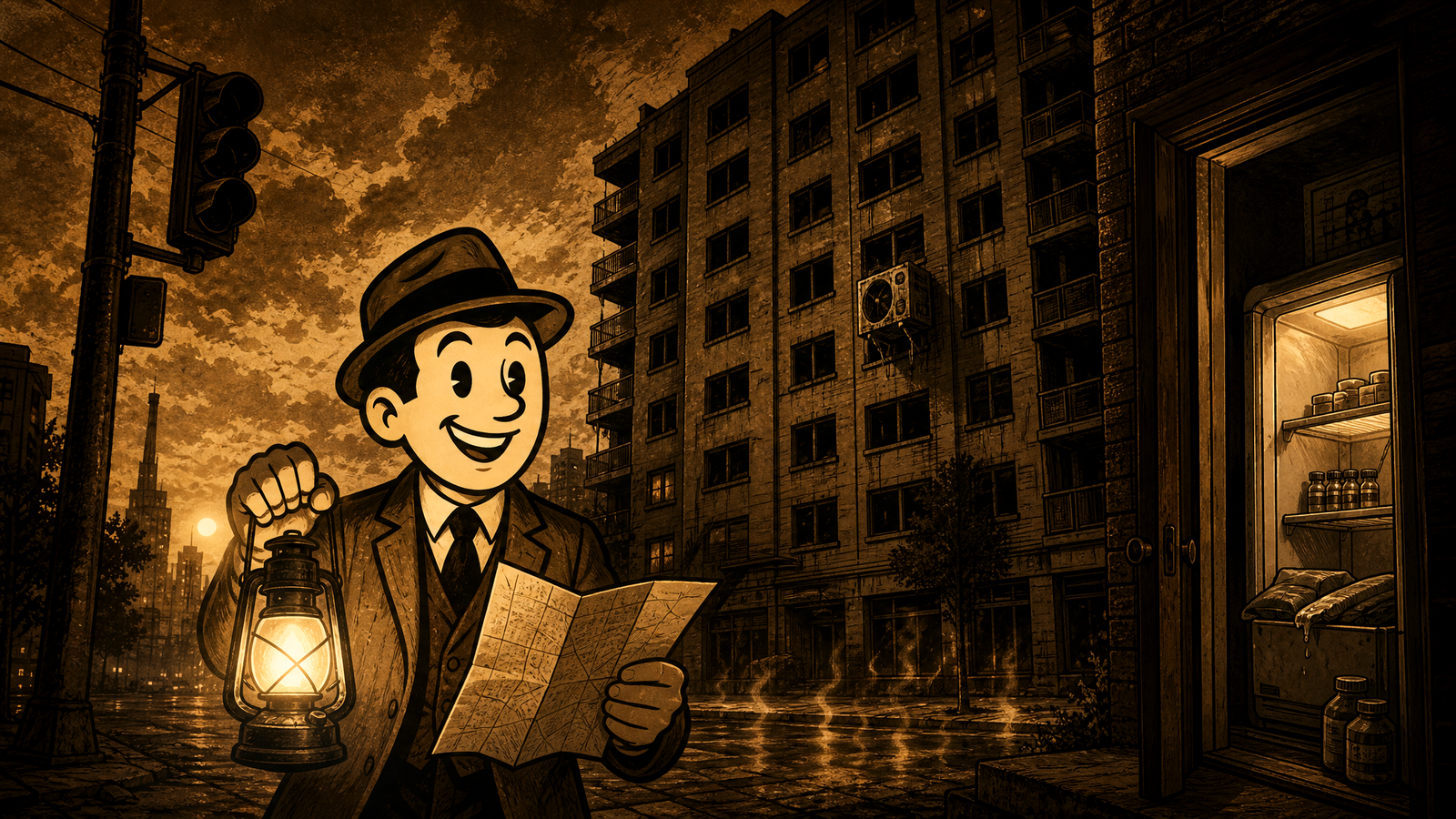
The modern pattern
A heatwave becomes much more dangerous when the power fails. The danger is not only that the air conditioner stops. It is that several ordinary support systems start failing together.
Ready.gov warns that extreme heat can be deadly and that older adults, children, and people with certain illnesses or chronic conditions face greater risk. Ready.gov also notes that power outages can disrupt communications, water, transportation, stores, gas stations, ATMs, banks, food safety, and medical devices.
That is the part to recognize early: a heat blackout is not one problem. It is a stack of problems wearing the same ugly hat.
How the chain can unfold at home
| What changes | Why it matters | Family warning sign |
|---|---|---|
| Cooling stops | Indoor heat can build, especially in upper floors, apartments, poorly insulated rooms, and homes with limited shade. | Rooms stay hot after sunset; kids cannot sleep; older relatives seem weak or confused. |
| Phones and internet degrade | People struggle to confirm outage size, cooling-center options, utility updates, and family status. | Everyone is refreshing feeds but no one has a clear plan. |
| Food and medicine routines shift | Refrigerators, freezers, refrigerated medicines, and powered medical devices may need alternate plans. | The household starts arguing about what must stay cold and what can wait. |
| Roads and stores get pressure | Many families seek water, ice, batteries, fuel, or cooler places at the same time. | The “quick errand” turns into traffic, lines, low stock, or closed businesses. |
The decision pressure is the real danger
Families rarely get a clean warning that says: “This is the moment your home stopped being safe.” Instead, they get fragments: a weather alert, a flickering light, a utility estimate that changes twice, a child with a headache, an older neighbor who does not answer, a fridge thermometer climbing, and a spouse asking whether leaving is overreacting.
That uncertainty is exactly why the trigger should be decided before the emergency. Not a dramatic evacuation plan. A simple household rule.
What not to assume
- Do not assume a fan solves extreme heat. Ready.gov warns not to rely on a fan as the primary cooling device in extreme heat.
- Do not assume the outage is short. Prepare for changing estimates and make decisions based on household risk, not optimism.
- Do not assume everyone can self-monitor. Kids, older adults, and people under stress may not describe heat danger clearly.
- Do not create a second disaster. CDC and Ready.gov both emphasize generator and carbon monoxide safety during outages.
Connect the pattern
If this looks familiar, it should. Blackouts, winter freezes, and water disruptions all share the same family problem: a normal system fails, and the household has to make good decisions before certainty arrives.
Sources used for this field guide
Defeat the pattern before it reaches your house
History does not hand families certainty. It hands them patterns. Keep reading the cluster, choose one household trigger, and make the next hard decision smaller before the weather does it for you.
Browse the Field Library or see Defeat History tools and guides.
