
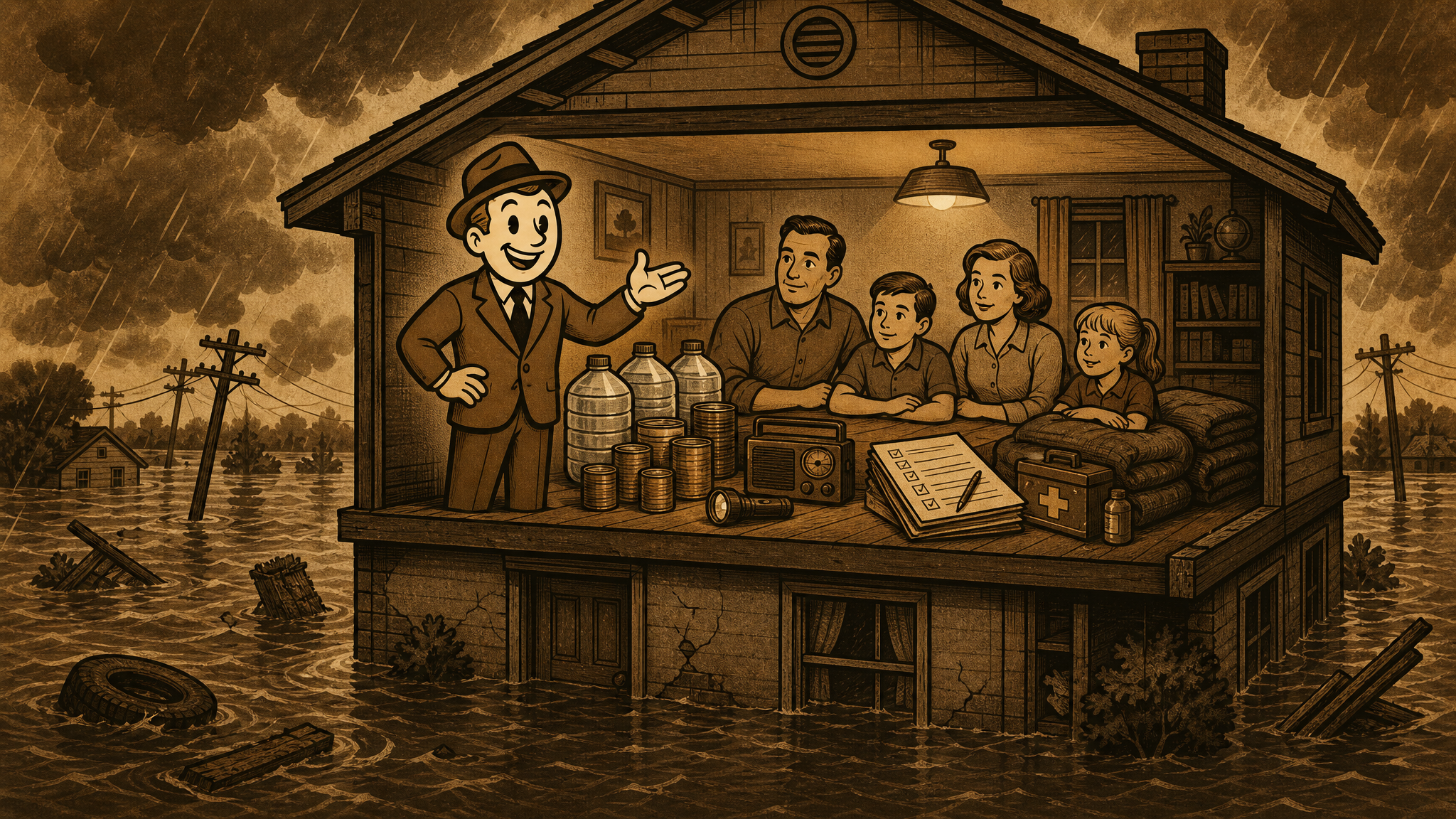
How to Prepare if Flooding Suddenly Traps Your Family at Home
The goal is not to make your home a bunker. The goal is for your family to function if roads are unsafe, water is moving, and “I’ll just run out real quick” becomes a very bad idea.
Set the road trigger before water makes the choice
The practical lesson is not “be afraid sooner.” It is to decide what your family will do when the first useful signal appears. A trigger turns vague concern into a calm household action.
A good trigger is specific enough to use, ordinary enough to explain, and early enough that the easy options are still available.
The calm first moves
- Choose road triggers early: Decide when roads, water, wind, or warnings mean errands stop and the family stays put or leaves early.
- Move before movement is hard: Cars, documents, chargers, water, medications, and pet supplies are easier to handle before roads or power fail.
- Do not negotiate with floodwater: A familiar road is still dangerous when covered. The family rule needs to be simple enough to follow under pressure.
Keep it normal enough to use
The goal is not to win an argument about worst-case scenarios. The goal is to make the next step feel reasonable inside a normal home. Use language like, “This is for the next power outage,” “This keeps the kids comfortable,” or “This saves us a stressful store run.”
Preparedness works best when it lowers household stress instead of adding to it.
The family-safe flood rule
Ready.gov’s flood guidance is blunt: find safe shelter right away under a flood warning; do not walk, swim, or drive through flood waters; move to higher ground or a higher floor when needed; and evacuate if told to do so. That is the safety frame. Everything else is logistics.
The flash-flood isolation checklist
- Alerts: enable Wireless Emergency Alerts, local alerts, and a NOAA Weather Radio if you have one.
- Higher ground: know the safest higher floor/area near home and where you would go if told to evacuate.
- Road rule: do not drive, walk, or let kids play in floodwater. Treat covered roads as closed.
- Water and food: Ready.gov recommends water, non-perishable food, and supplies for several days.
- Medicine: keep a printed medication list and avoid waiting until refill day during flood season.
- Power: charge phones and power banks before storms; keep flashlights and batteries reachable.
- Documents: keep IDs, insurance, and key papers in a waterproof container or digital backup.
- Sanitation: have trash bags, wipes, soap, gloves, and a plan if normal plumbing is unsafe or unavailable.
- Pets/kids: keep carriers, leashes, comfort items, snacks, and kid-safe explanations ready.
What to do by warning level
| Signal | What it means for the household | Action |
|---|---|---|
| Flood Watch | Conditions are possible. | Charge devices, check supplies, move valuables/cars from low areas, confirm the family plan. |
| Flood Warning | Flooding is happening or imminent. | Find safe shelter; avoid floodwater; follow evacuation or higher-ground instructions. |
| Flash Flood Warning/Emergency | Fast, dangerous flooding is occurring or expected. | Move immediately to safe/high ground if needed. Do not try to beat water across a road. |
| After water recedes | Hazards may remain. | Avoid floodwater, damaged roads, downed power lines, and contaminated cleanup without protection. |
Spouse-safe framing
If this feels dramatic, make it boring on purpose:
That is not panic. That is refusing to let a flooded road make the family decision for you.
Read the rest of this cluster
Sources
Next step: make the first 72 hours less chaotic.
The free First 72 Hours Field Guide helps families recognize disruption patterns early and act without panic. If household buy-in is the hard part, Bug In Without Freaking Out Your Spouse gives you a calmer way to build a plan together.
