
Keeping Kids Safe During Extreme Heat Without AC
A spouse-safe, kid-aware plan for extreme heat when air conditioning is unavailable, unreliable, or knocked out by a power failure.
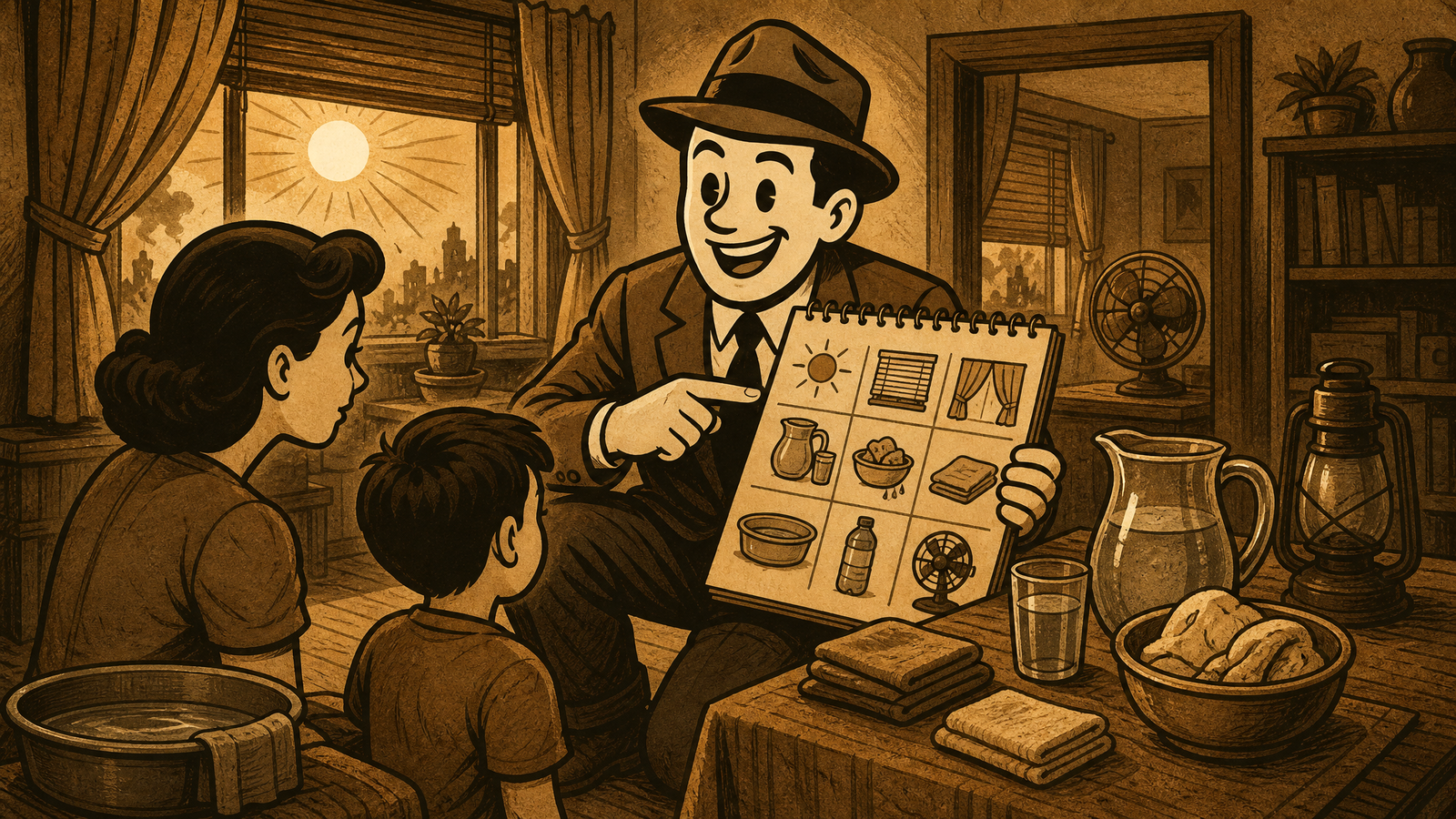
The family rule
Extreme heat without reliable air conditioning is not a toughness contest. It is a trigger problem. Families do better when they decide in advance what signs mean “cool down now,” what signs mean “leave for a cooler place,” and what signs mean “get medical help.”
National Weather Service heat guidance identifies young children and infants as especially vulnerable because their bodies are less able to adapt to heat than adults. Ready.gov says older adults, children, and people with certain illnesses and chronic conditions are at greater risk from extreme heat.
Build a simple heat trigger plan
| Trigger | Household move | Why it helps |
|---|---|---|
| Heat advisory or several 90°F+ days forecast | Pre-cool rooms if possible, close shades, identify a cooling location, charge phones/power banks, freeze water bottles if power is available. | Small moves before the heat reduce the first-day scramble. |
| Indoor rooms stay hot after sunset | Move sleeping areas to the coolest safe room, reduce oven use, plan a cooling-center/library/mall visit for the next day. | Night recovery matters. A body that never cools is under more stress. |
| Power fails during dangerous heat | Start the cooling plan immediately: hydration, cool cloths/showers if water is safe, shaded airflow, check vulnerable people, monitor official updates. | The first hour is for decision clarity, not denial. |
| Confusion, fainting, severe weakness, worsening symptoms, or heat stroke concern | Call emergency services. Move the person cooler while waiting. Follow official medical guidance. | Heat stroke is a medical emergency. Do not try to tough it out. |
Kid-aware cooling without making it scary
- Name it calmly. “It is a high-heat day, so we are doing our cool-house rules.” Kids need confidence, not a crisis briefing.
- Move play to the coolest window. Shade, lower floors, closed curtains, and less oven use can reduce the load.
- Use water wisely. Drink fluids, use cool cloths or showers when safe, and avoid turning hydration into a lecture nobody wants.
- Watch behavior. Headache, unusual sleepiness, dizziness, nausea, confusion, or a child acting “not like themselves” deserves attention.
- Have a leaving point. If the home is not cooling and risk is rising, go to a cooler safe place before everyone is exhausted.
What belongs in the plan
For a deeper household system, this is where the paid guide earns its place: Bug In Without Freaking Out Your Spouse helps turn uncomfortable “what if” conversations into normal home routines without making the family feel like a preparedness project.
Keep going
Heat safety connects to water, power, and family communication. Do not try to solve all of it at once. Pick one household trigger and one cooling destination today. That is how families build capability without turning into a panic committee.
Sources used for this field guide
Defeat the pattern before it reaches your house
History does not hand families certainty. It hands them patterns. Keep reading the cluster, choose one household trigger, and make the next hard decision smaller before the weather does it for you.
Browse the Field Library or see Defeat History tools and guides.
