
When Critical Systems Were Hacked in the Real World
Infrastructure cyberattacks do not feel like movie hacking to ordinary families. They feel like gas shortages, closed counters, delayed service, confused updates, and systems that suddenly need paper again.
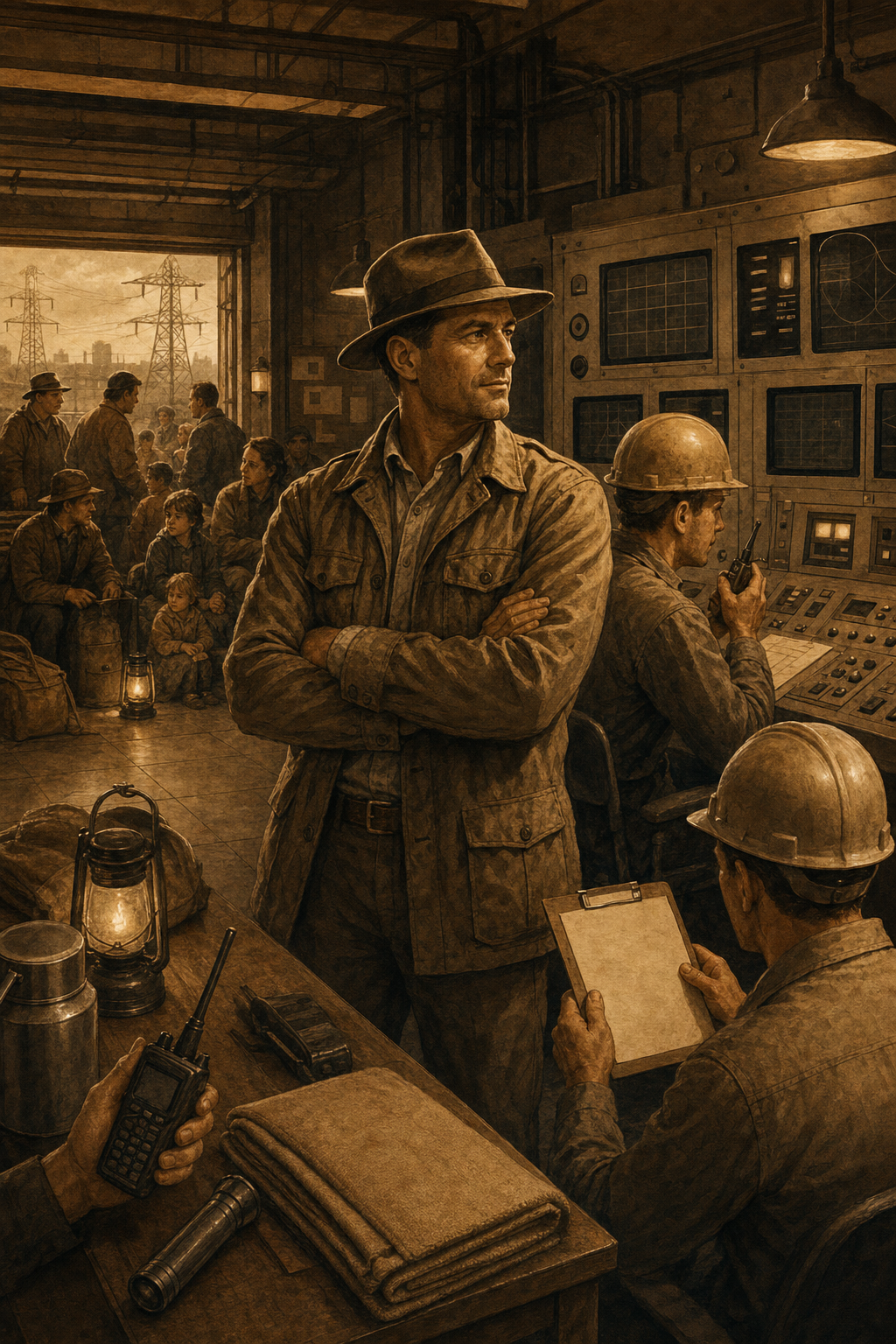
The short version
Most people imagine a cyberattack as something happening inside a computer. For families, the practical problem starts when a system outside the computer stops behaving normally: fuel is harder to get, a payment terminal fails, a utility delays service, a phone line jams, or an organization suddenly cannot answer basic questions.
That is why real-world infrastructure cyber incidents matter. They show a pattern families can recognize without becoming computer experts: when digital systems are disrupted, physical life gets slower, more manual, and more uncertain.
What ordinary people actually experienced
In 2021, the Colonial Pipeline ransomware incident became a public lesson in how digital disruption can jump into everyday life. The Department of Homeland Security announced new pipeline cybersecurity requirements after the incident, and TSA described pipeline systems as critical because they transport fuel and other hazardous liquids across the country.
For regular families, the incident was not experienced as technical jargon. It was experienced as uncertainty around fuel availability, long lines in some areas, people topping off tanks, and businesses trying to understand what would happen next. Some of that pressure came from the incident itself. Some came from public reaction. Both matter, because families live inside the reaction too.
Reasonable people did not have perfect information. One neighbor said fill up now. Another said it was overblown. News moved faster than official clarity. Parents had work, school, appointments, and ordinary errands. Waiting seemed reasonable. So did acting early. That is the uncomfortable middle where most family decisions happen.
Cyber does not stay neatly digital
CISA’s ransomware guidance treats these attacks as an operational problem, not just a computer problem. Critical infrastructure owners are urged to prepare, reduce exposure, and know how to respond. Water systems receive their own cybersecurity action guidance from CISA and partner agencies because water operations increasingly depend on connected technology, remote access, vendors, billing platforms, and control systems.
The danger pattern before the headline
The first recognizable danger pattern is not always “the system is down.” It is friction spreading across normal tasks.
- A company says service is temporarily unavailable but cannot give a clear timeline.
- Stores or offices switch to cash, paper forms, or manual workarounds.
- Customer-service lines jam because everyone has the same question.
- People begin acting on rumor because official information is slow.
- A local disruption becomes a regional behavior problem: lines, hoarding, delays, and bad assumptions.
History keeps showing this: the technical cause may be specific, but the household pressure is old. Families must decide while systems are half-working and information is incomplete.
The family lesson
You do not need to become a cybersecurity analyst. You need to understand what life looks like when digital convenience disappears for a while.
The right response is boring: keep a little fuel discipline, maintain paper contact information, have a small cash buffer, know alternate ways to receive alerts, keep essential prescriptions from running to zero when possible, and avoid joining panic behavior.
Read the rest of this cluster
Sources used for this field guide
- CISA: StopRansomware guidance, source.
- CISA: Cyber Incident Guidance for Critical Infrastructure, source.
- CISA/NSA/EPA: Top Cyber Actions for Securing Water Systems, source.
- TSA: Pipeline Cybersecurity Actions, source.
- FBI Internet Crime Complaint Center 2023 Report, source.
- Ready.gov: Cybersecurity, source.
- Ready.gov: Power Outages, source.
- Ready.gov: Financial Preparedness, source.
Defeat the pattern before it reaches your house
Cyber disruption is easiest to handle before it becomes personal. Pick one paper contact sheet, one payment backup, and one household function you refuse to leave to a single app.
Browse the Field Library or download the First 72 Hours field guide.
