
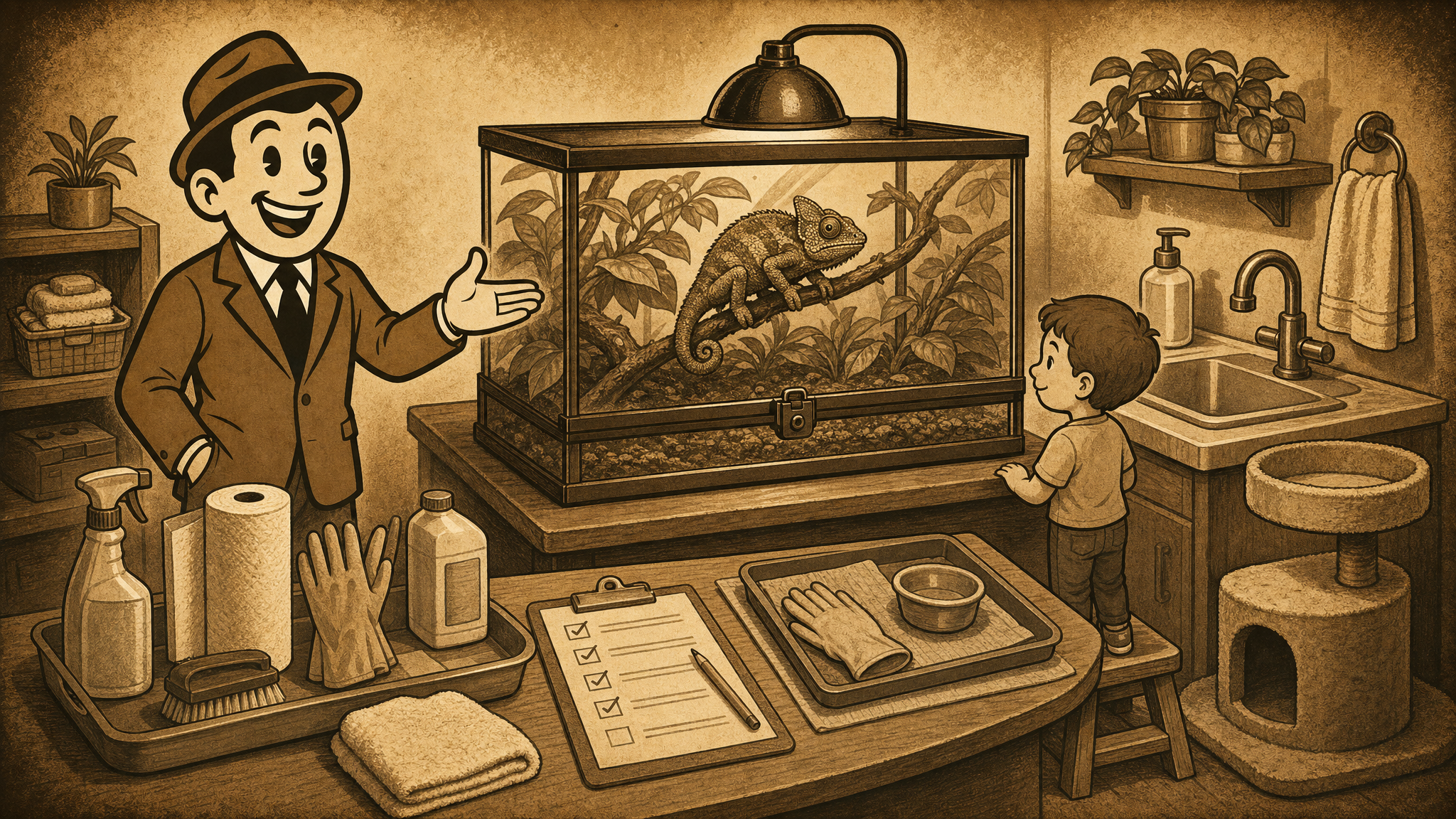
Pet Chameleon Salmonella Watch
Verified CDC update and calm family actions for households with pet veiled chameleons, reptiles, babies, toddlers, older adults, or immunocompromised family members.
Current status
Danger/Action level: 2 — Prepare for affected households
United States — multistate outbreak; risk follows contact with pet veiled chameleons, their habitats, and contaminated surfaces.
Families with pet chameleons or other reptiles, especially homes with children under 5, adults 65+, or people with weakened immune systems.
May 15, 2026, based on CDC media release and linked outbreak notice.
CDC reported five children across four states sick from the same strain of Salmonella linked to pet veiled chameleons. All reported sick children are two years old or younger. Defeat History is tracking this as an exposure-specific household hygiene risk, not a broad public panic event.
What families should do now
- Wash hands after handling a chameleon, reptile supplies, tank items, or anything in the animal’s living area.
- Do not eat or drink around the chameleon or its habitat.
- Clean chameleon supplies outside the house when possible. If cleaning indoors, do not use the kitchen or food-prep areas.
- Keep reptiles away from children under 5, older adults, and immunocompromised family members.
- If a chameleon is not a safe fit for the household, do not release it outside; contact a rescue, shelter, or pet store about rehoming.
What would change the level
- CDC reports more illnesses, hospitalizations, or broader animal/source links.
- State or local health departments identify local clusters.
- CDC changes guidance for households, pet stores, schools, daycares, or animal events.
Sources to check first
- CDC: Salmonella outbreak linked to pet veiled chameleons
- CDC Salmonella and animal-contact guidance
- State and local health departments for location-specific case information
This is practical preparedness education, not medical diagnosis or emergency instruction.
